
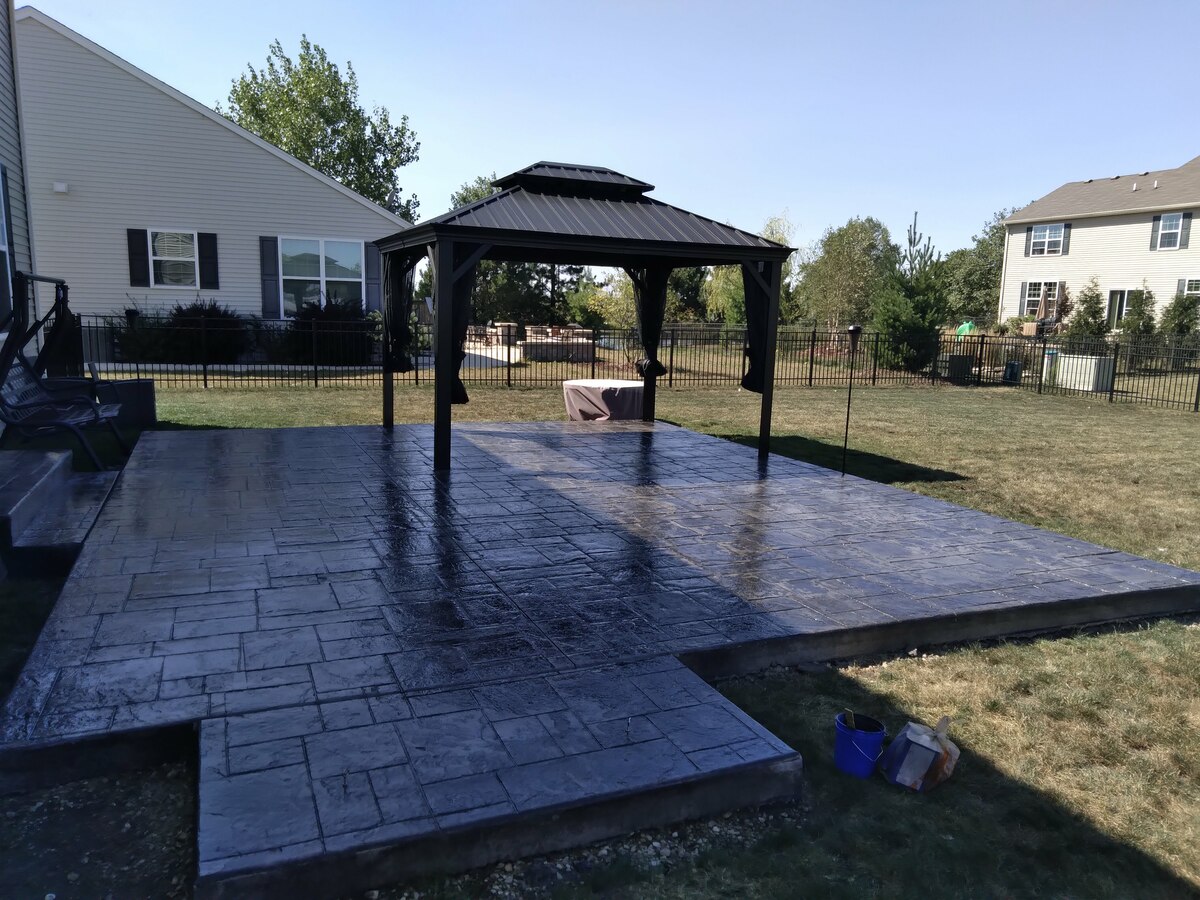
 Illustrative
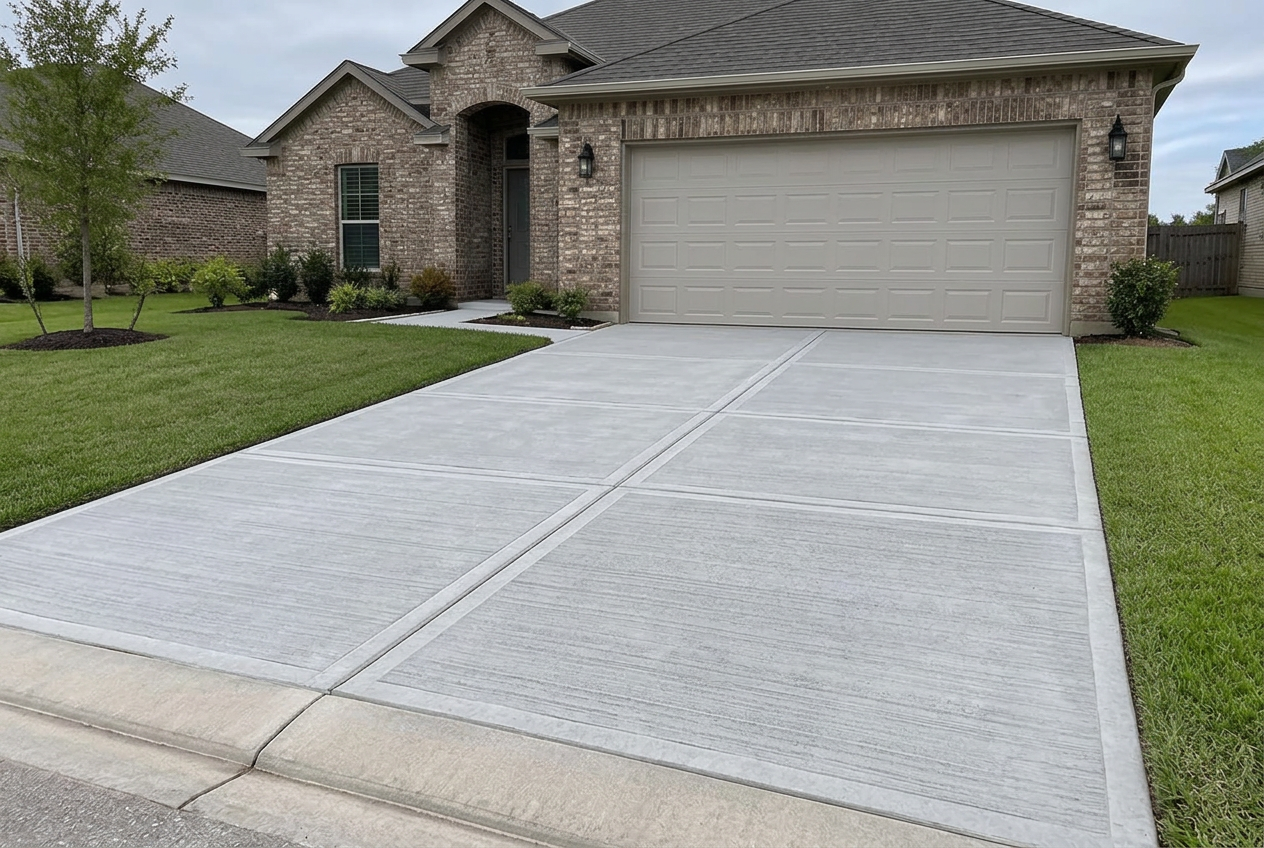
Broom finish
The standard driveway surface. Textured grip that stays slip-resistant.
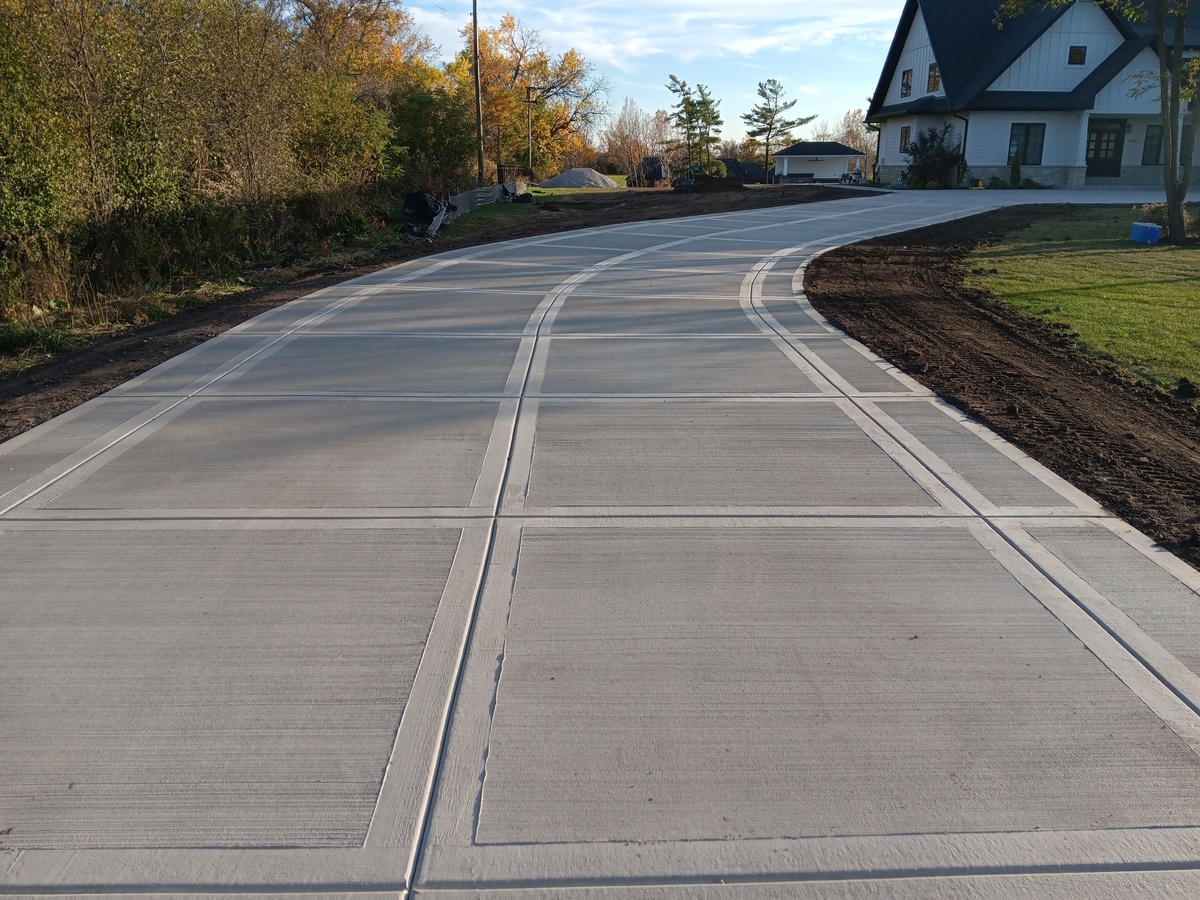
Driveways & Walkways · Joliet & Chicagoland
New driveways, aprons, sidewalks, and walkways for homes across Joliet and Chicagoland. One crew handles excavation, base, forms, pour, and finish.
Source: City of Joliet
What's included
Every flat surface a car or a foot touches, planned as one job.
Full replacements and new pours, sized to how you park and turn.
The section that meets the street, built to the city's requirements.
Front walks and side paths that stay level and drain.
Finish
Same base, same strength. The finish decides the look.
IllustrativeThe standard driveway surface. Textured grip that stays slip-resistant.
 Illustrative
How we build it
Most driveway problems start below the surface. Here's every layer, in order.
The area is dug to depth and shaped to drain away from the house.
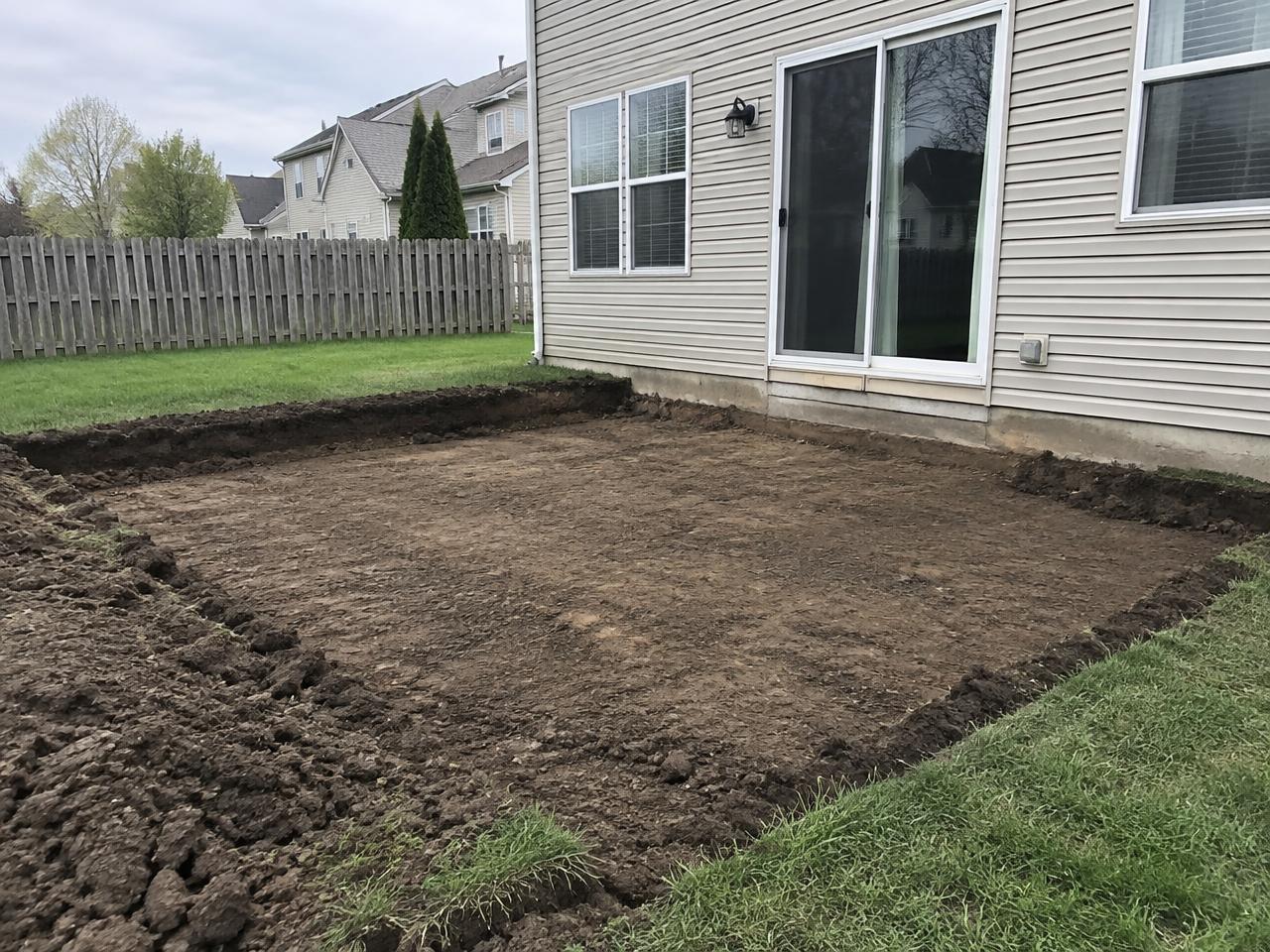 Illustrative
Soft spots come out; compacted gravel goes in for an even bed.
Source: Concrete Network
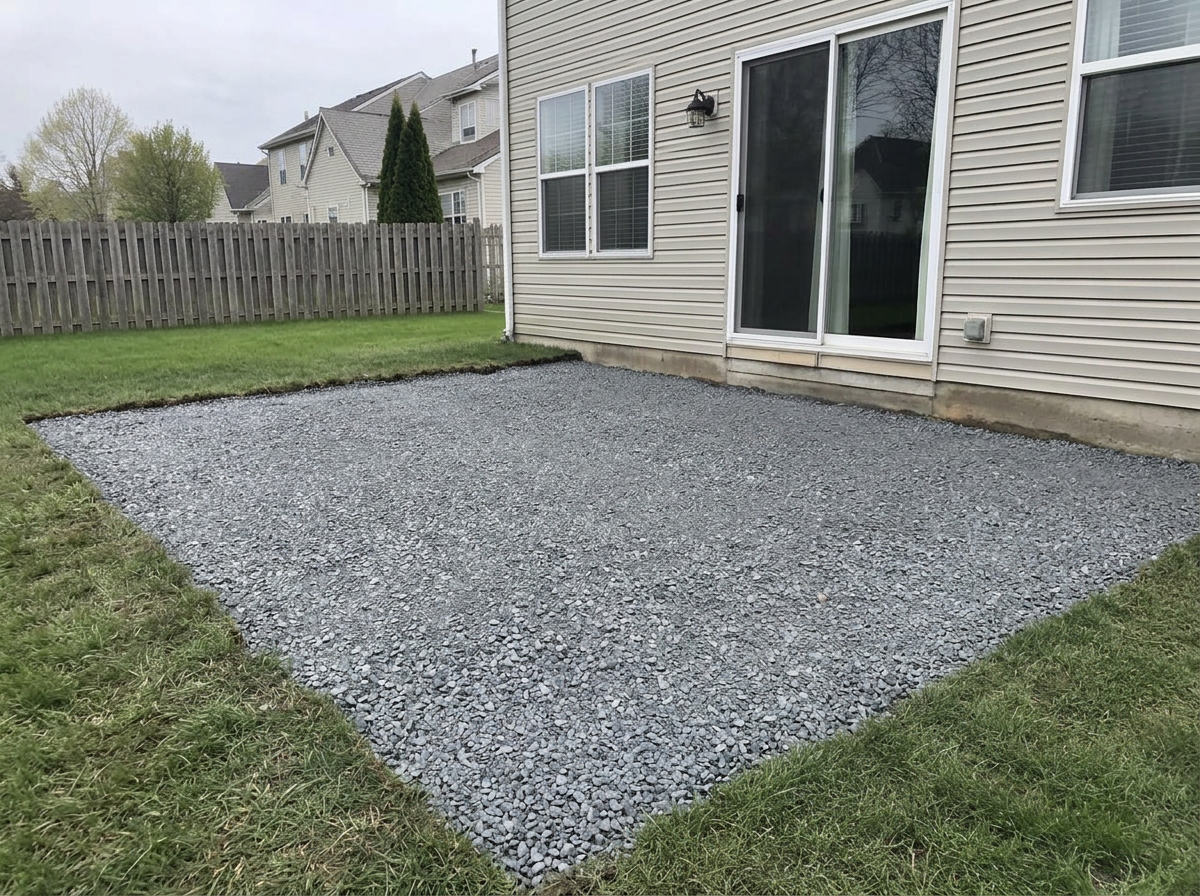 Illustrative
Forms set the shape and the edges before anything is poured.
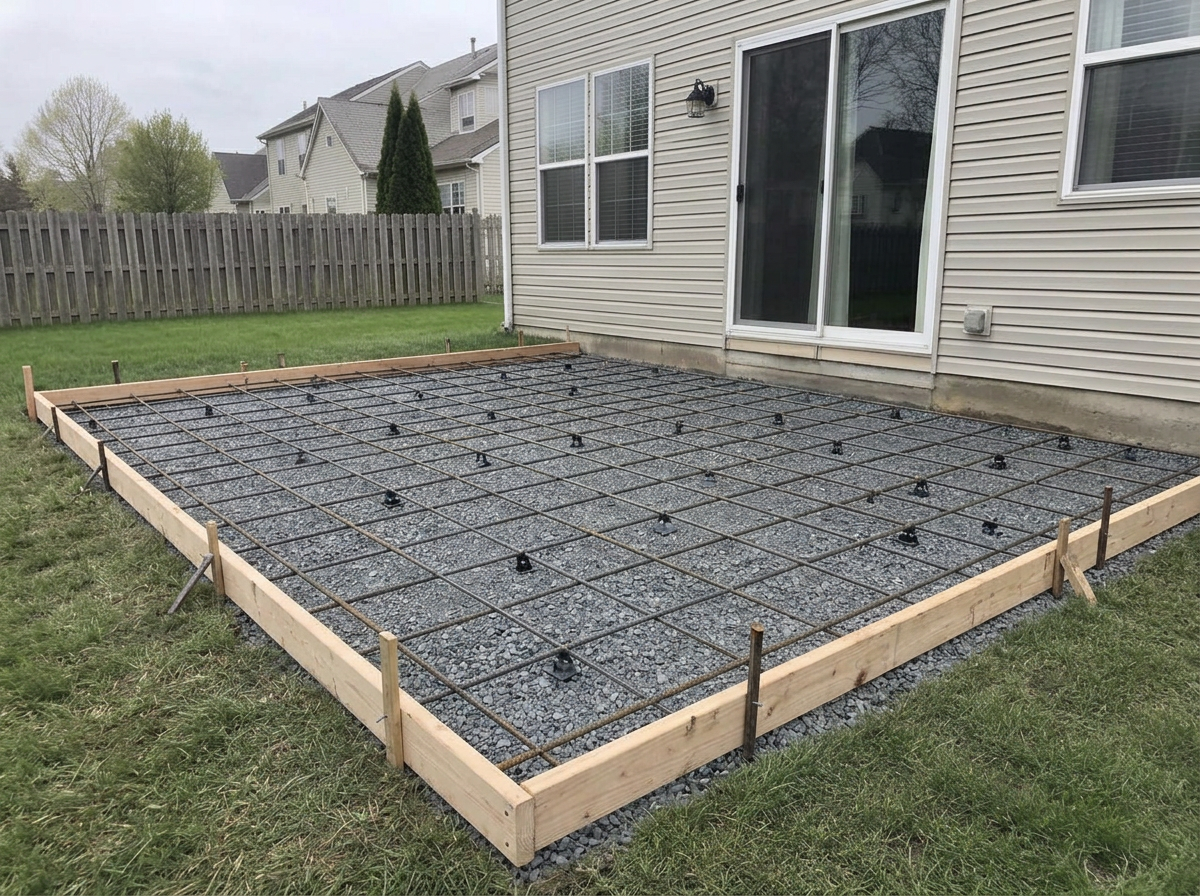 Illustrative
Reinforcement adds strength, and control joints are planned before the pour.
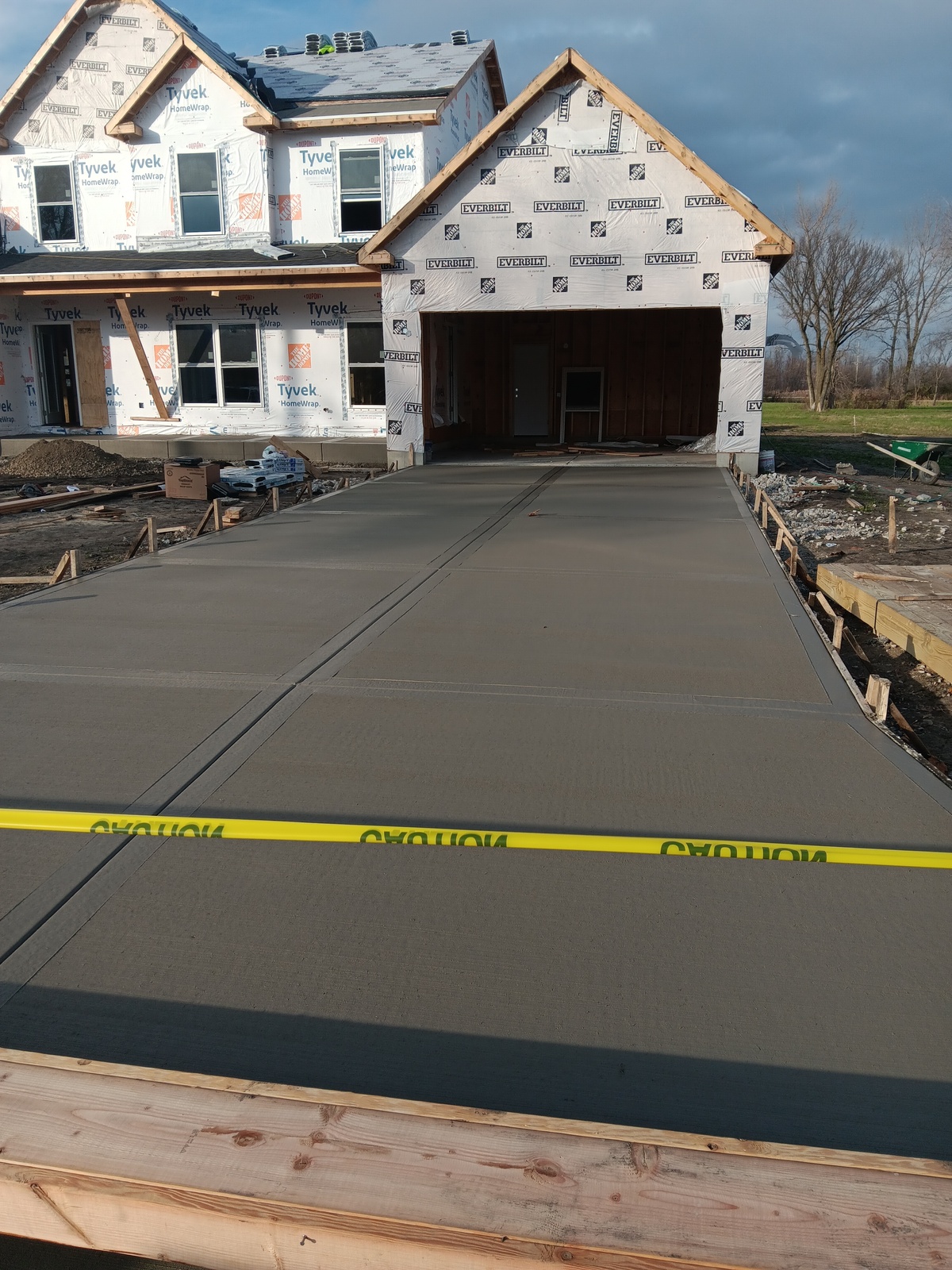
IllustrativePoured, leveled, and broom-finished by the same crew that prepped it.
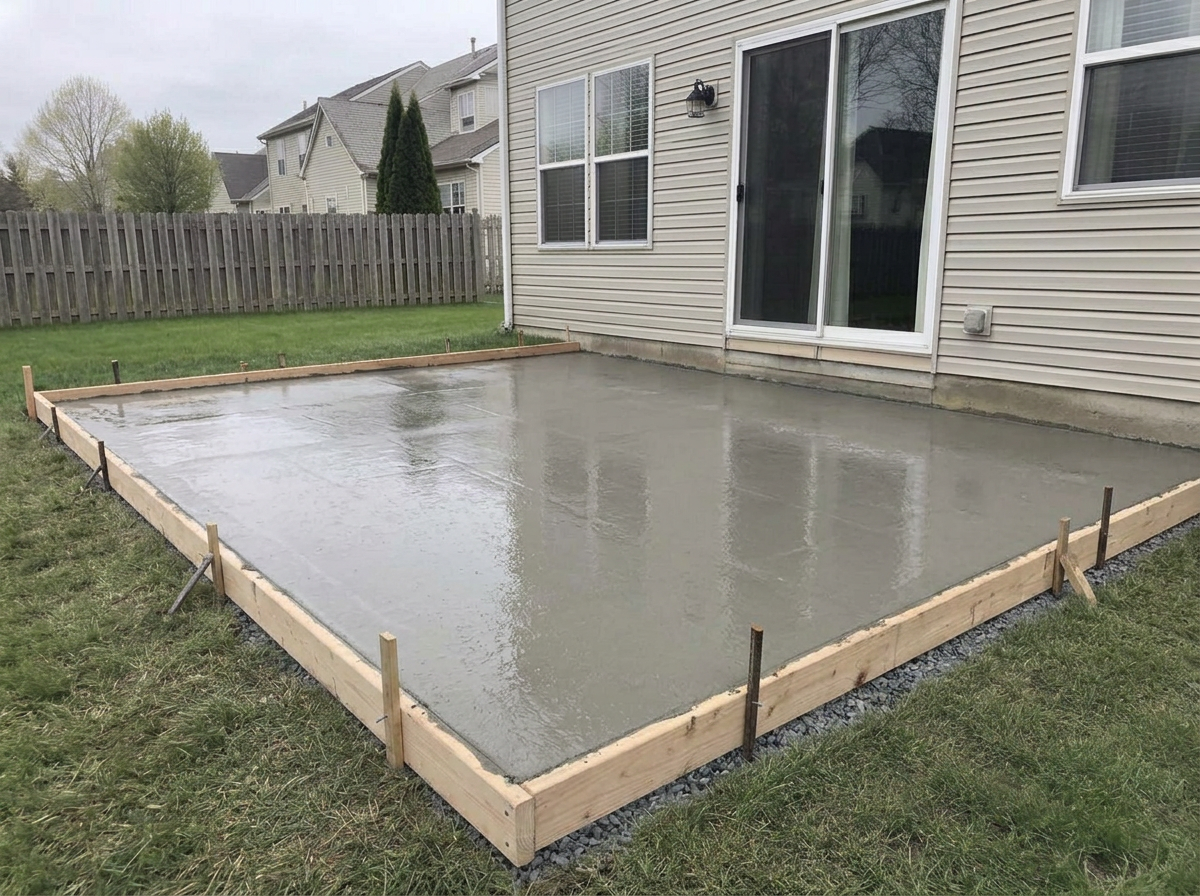 Illustrative
Cured, then opened to foot traffic first and cars after.
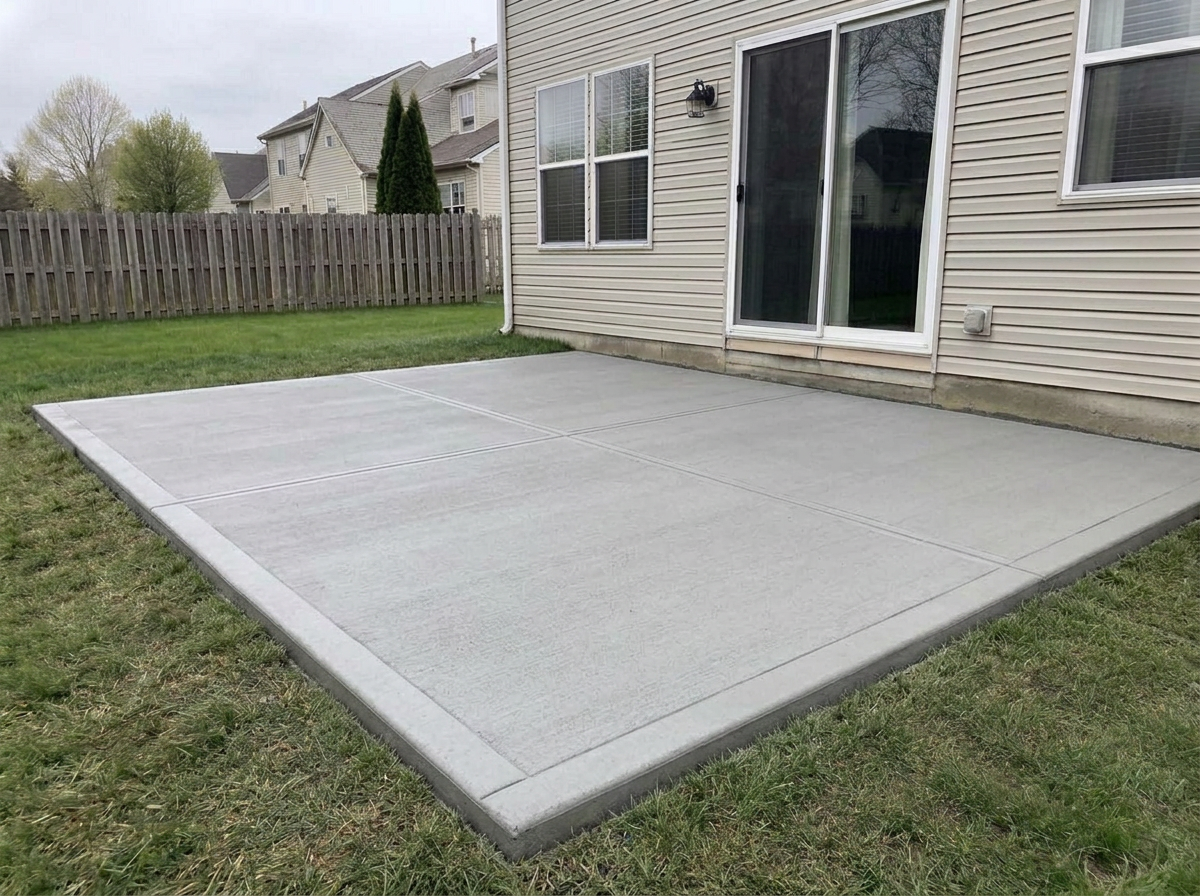 IllustrativeIllustrative
Step 1 of 6 · Excavate & grade
No handoffs. No gaps. One crew from the first cut to the first car.
The standard
General guidance from concrete industry sources. Ask any contractor for theirs.
The minimum for a driveway. At 5 in., about 50% more load capacity for about 20% more cost.
Source: Concrete Network
Control joints about every 10 ft on a 4 in. slab, cut a quarter of the depth, so cracks form where they're planned.
Source: Concrete Network
The minimum pitch away from the house, so water leaves instead of pooling and freezing.
Source: Concrete Network
Tiny air pockets that give freeze-thaw somewhere to go. Standard for outdoor concrete in Illinois.
Source: PACA
Recent work
Real projects from Joliet and Chicagoland.
After the pour
At least a week of curing before cars. Skipping it can cost up to half the strength.
Source: Concrete Network
None in the first year, and never ammonium nitrate or ammonium sulfate. Sand for traction.
Source: PACA
Penetrating silane or siloxane sealers hold up best against salt and freeze-thaw.
Source: PACA
Control joints guide cracking, so a crack in a joint is the plan working.
Yes. Driveways, aprons, and sidewalks need a permit with an accurate plat of survey, even at the same size and location. Other towns set their own rules.
Source: City of Joliet
At least 4 in. Going to 5 in. adds about 50% load capacity for about 20% more cost.
Source: Concrete Network
All concrete can hairline-crack. A compacted base, reinforcement, and joints at the right spacing keep cracks small and where they're planned.
Plan on at least a week of curing.
Source: Concrete Network
The apron is part of the job. In Joliet it's covered by the same permit as the driveway.
Source: City of Joliet
Get started
Request a free quote and we'll measure, check drainage and access, and walk you through options and timeline. Prefer to talk? Call 815-836-1828, 7 days a week.
Free quotes, 7 days a week.